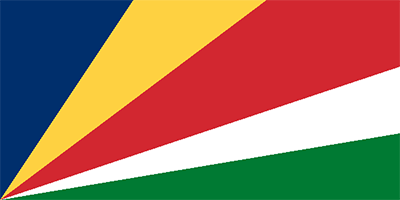
Five colors fanning out from the lower hoist corner form which Indian Ocean nation's flag?
Answer
Correct answer: Seychelles.
The oblique bands of blue, yellow, red, white and green represent a dynamic young country moving boldly into the future.
Correct answer: Seychelles.
The oblique bands of blue, yellow, red, white and green represent a dynamic young country moving boldly into the future.
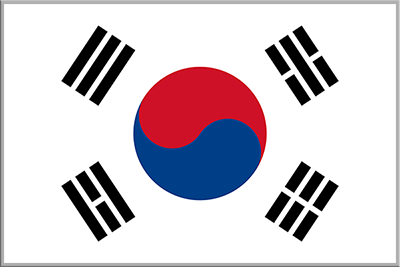
Correct answer: South Korea.
The central circle is the Taegeuk, a symbol of cosmic balance; the flag itself is called the Taegeukgi.
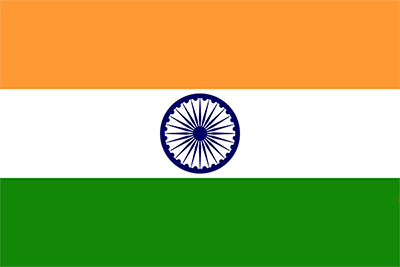
Correct answer: The Ashoka Chakra.
Taken from a 3rd-century-BC pillar of Emperor Ashoka, the wheel represents the eternal cycle of law and righteousness.
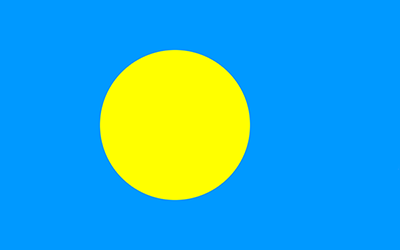
Correct answer: Palau.
The disc represents the full moon, traditionally considered an ideal time for fishing, planting, and celebrations in Palauan culture.
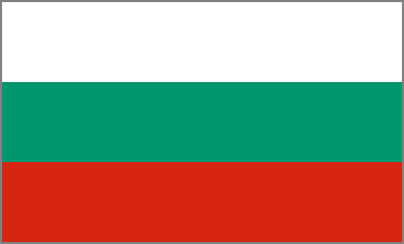
Correct answer: Bulgaria.
White stands for peace, green for the country's fertile farmland, and red for the courage and blood of its people.
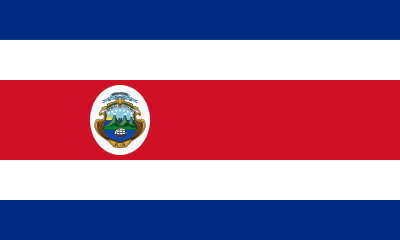
Correct answer: Costa Rica.
The red band was added in 1848, inspired by the ideals of the French Revolution. The state version's arms show three volcanoes and two oceans.
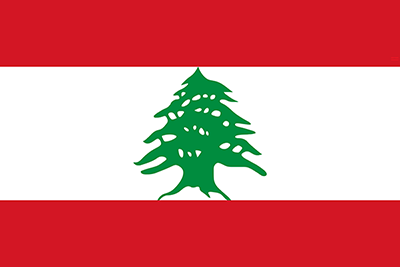
Correct answer: A cedar.
By specification the cedar must be entirely green and touch both red stripes — the brown trunk seen on many printed flags is, strictly speaking, incorrect.
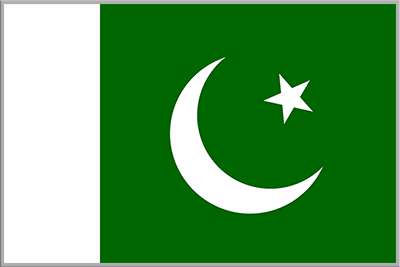
Correct answer: The country's religious minorities.
Green with the crescent and star stands for the Muslim majority; the white band is a deliberate pledge to the nation's minority communities.
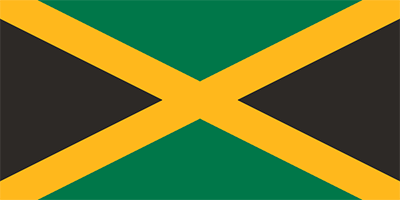
Correct answer: Jamaica.
Since Mauritania added red bands to its flag in 2017, Jamaica's has been the only national flag with no red, white, or blue; its black, green, and gold were chosen to share no color with Britain's Union Jack.
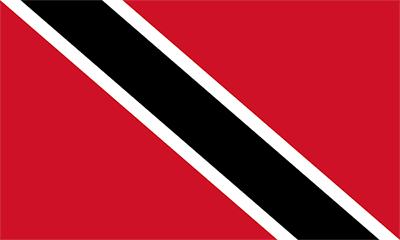
Correct answer: Trinidad and Tobago.
Red is for the warmth of the people and sun, black for strength and the land's wealth, and white for the sea and purity.

We Value Your Opinion Comments