
Which country's flag is a simple horizontal field of blue over yellow?
Answer
Correct answer: Ukraine.
The blue represents the sky above the country's vast golden wheat fields.
Correct answer: Ukraine.
The blue represents the sky above the country's vast golden wheat fields.

Correct answer: Serbia.
The four "S" shapes stand for a national motto meaning "Only Unity Saves the Serbs."

Correct answer: Croatia.
The red-and-white "sahovnica" checkerboard has been a Croatian emblem for many centuries.

Correct answer: Luxembourg.
The two are so alike that Luxembourg has repeatedly debated switching to a banner with its heraldic red lion instead.

Correct answer: Belgium.
The colours come from the arms of the Duchy of Brabant — a gold lion with red claws and tongue on a black field.

Correct answer: Iceland.
Blue is for the mountains, white for ice and snow, and red for the island's volcanic fire.

Correct answer: Norway.
Norway added a blue cross to Denmark's red-and-white flag in 1821, combining the colours of liberty shared by France, Britain and the United States.

Correct answer: Uganda.
The grey crowned crane is Uganda's national bird; the black, yellow and red bands stand for the people, sunshine and brotherhood.

Correct answer: Slovenia.
Mount Triglav is the country's highest peak; the wavy lines are its rivers and Adriatic coast, and the three stars come from the medieval Counts of Celje.

Correct answer: 17.
The 17 rays represent the 16 Gilbert Islands together with Banaba.

Correct answer: A hoe.
The hoe stands for agriculture and the rifle for defence, laid together over an open book for education.

Correct answer: The bo (Bodhi) tree.
The bo-leaves stand for the four Buddhist virtues of loving-kindness, compassion, joy and equanimity.

Correct answer: 10.
The ten stars represent the country's ten parishes.

Correct answer: 8.
The eight rays honour the first eight provinces to rise in revolt against Spanish rule.
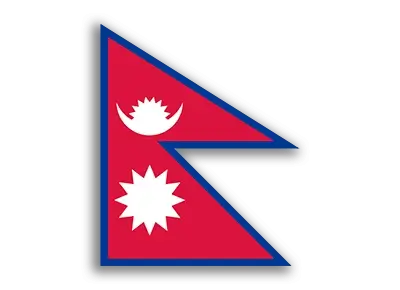
Correct answer: A crescent moon.
The moon sits in the upper pennant and the sun in the lower, expressing the wish that the nation endure as long as they do.
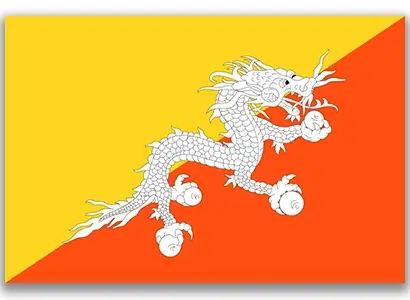
Correct answer: Jewels.
The Druk, or Thunder Dragon, grasps jewels that symbolise the nation's wealth and protection.

Correct answer: 40.
The 40 rays represent the 40 Kyrgyz tribes united in legend by the hero Manas.

Correct answer: Red and white.
Named "Sang Saka Merah-Putih," it places red for courage above white for purity.

Correct answer: Square.
Switzerland and Vatican City are the only two countries in the world with square national flags.

Correct answer: 50.
The 50 stars stand for the 50 states, while the 13 stripes recall the original colonies.

Correct answer: South Korea.
The central circle is the Taegeuk, a symbol of cosmic balance; the flag itself is called the Taegeukgi.
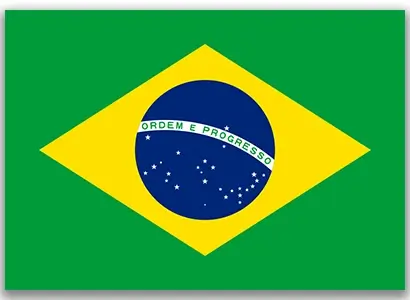
Correct answer: Brazil.
The band across the globe reads "Ordem e Progresso" — "Order and Progress."
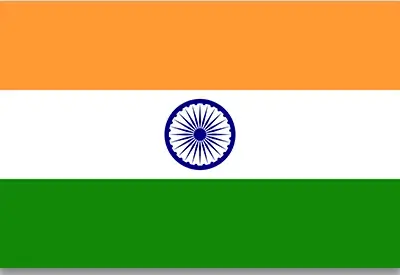
Correct answer: India.
The 24-spoke wheel is the Ashoka Chakra, an ancient symbol of law and progress.

Correct answer: China.
One large star leads four smaller ones, a design adopted when the People's Republic was founded in 1949.
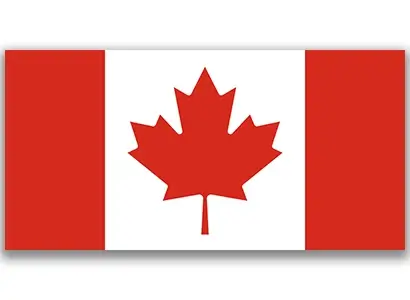
Correct answer: Canada.
The maple leaf has been a Canadian emblem for centuries; this design was adopted in 1965.

Correct answer: France.
Born of the French Revolution, this tricolour has inspired the flag designs of dozens of nations.
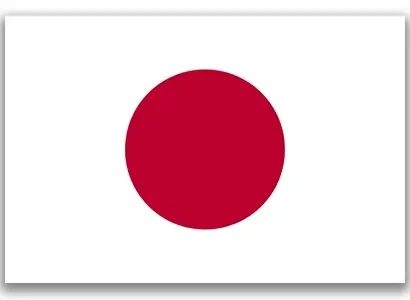
Correct answer: Japan.
The red disc represents the sun, fitting for a nation long known as the Land of the Rising Sun.

Correct answer: United Nations.
The map is a polar projection centred on the North Pole so that no single country sits at the middle; the olive branches are an ancient symbol of peace.

Correct answer: Greenland.
Called "Erfalasorput" ("our flag"), it is the only flag of a Nordic territory without a cross; the half-and-half disc suggests the sun setting over the ice and sea.

Correct answer: Macao.
Adopted in 1999 when Portugal transferred sovereignty to China, the lotus is the region's floral emblem while the bridge and water reflect its setting on the Pearl River estuary.

Correct answer: Hong Kong.
Adopted in 1997 when sovereignty passed from Britain to China, each of the flower's five petals carries a small red star, echoing China's national flag.

Correct answer: Nauru.
The gold line is the Equator; the 12-pointed star sits just below it and slightly off-centre, showing where Nauru actually lies in the Pacific.
Correct answer: Kiribati.
The sun's 17 rays and the frigatebird represent power, freedom and the spread of the country's islands across the Pacific.

Correct answer: Fiji.
The sky-blue field represents the Pacific Ocean. Although Fiji became a republic, it has kept the colonial-era Union Jack on its flag.

Correct answer: Papua New Guinea.
Susan Karike sketched the winning design in her school exercise book in 1971. The red, black and yellow are drawn from traditional art and clothing.

Correct answer: New Zealand.
A 2016 national referendum considered replacing it with a silver-fern design, but voters chose to keep the current flag.
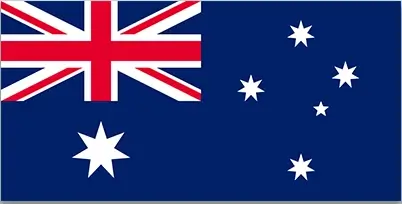
Correct answer: Australia.
The seven-pointed star stands for the six states plus the territories. New Zealand's similar flag drops the big star and uses four red stars instead of five.
Correct answer: Dominica.
The endangered Sisserou parrot lives only on Dominica. The cross of yellow, black and white bands represents the island's peoples, soil and faith; its purple plumage makes Dominica one of only two countries to use purple on a flag.

Correct answer: Barbados.
The broken shaft marks independence from Britain in 1966; the blue bands are the sea and sky, the gold the island's sand.

Correct answer: Saint Lucia.
Blue is the sea, gold the sunshine, and the black-and-white peaks the two volcanic Pitons rising from the sea — and the harmony of the island's peoples.

Correct answer: Uruguay.
The nine stripes stand for the country's nine original departments; the sun, with a human face, is shared with Argentina as a symbol of independence.

Correct answer: Haiti.
Tradition says the flag was made by tearing the white band out of the French tricolour. The motto means "Unity Makes Strength."

Correct answer: Panama.
The blue and red were said to represent the country's two main political parties, with the white standing for peace between them.

Correct answer: Nicaragua.
Nicaragua is one of only two countries to use purple on its flag — in the tiny rainbow of its emblem. The five volcanoes again recall the Central American federation.

Correct answer: Honduras.
The five stars represent the members of the United Provinces of Central America, kept on the flag in hope of one day reuniting.

Correct answer: Guatemala.
The resplendent quetzal symbolises liberty — it is said not to survive in captivity. The blue-white-blue recalls the old Central American federation.

Correct answer: Venezuela.
Bolivar called for a star to honour each province of the independence movement; an eighth was later added. The state arms show a wild horse galloping toward freedom.

Correct answer: Colombia.
The colours come from Gran Colombia, the union led by Simon Bolivar: yellow for the land's gold, blue for the seas, red for the blood of independence.

Correct answer: Costa Rica.
The red band was added in 1848, inspired by the ideals of the French Revolution. The state version's arms show three volcanoes and two oceans.

Correct answer: Jamaica.
Gold is for sunshine and mineral wealth, green for the land, black for the strength and creativity of the people.

Correct answer: Cuba.
Its design closely mirrors Puerto Rico's flag in reverse colours. The triangle's red is the blood of independence; the white star is the nation.

Correct answer: Bolivia.
Since 2009 the square, seven-coloured Wiphala has held equal status as a national symbol. On the tricolour, red is valour, yellow mineral wealth, green the land.

Correct answer: Peru.
Legend says the colours were inspired by flamingos the liberator San Martin saw taking flight. The state version's arms show a vicuna, a cinchona tree and a cornucopia.

Correct answer: Chile.
Adopted in 1817, it actually predates the similar-looking Lone Star flag of Texas; the single star is a guide to progress and honour.
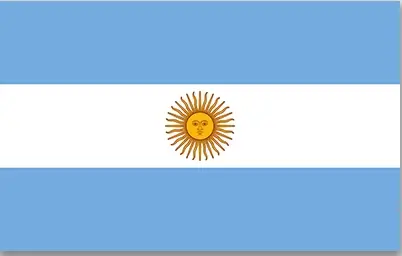
Correct answer: Argentina.
The sun commemorates the May Revolution of 1810 against Spanish rule. Uruguay's flag carries a similar sun, but over blue-and-white stripes.

Correct answer: Mexico.
The scene comes from the Aztec legend that foretold where to found their capital, Tenochtitlan — the site of today's Mexico City.
Correct answer: United States.
In 1958 Robert Heft, 17, sewed a 50-star flag before Alaska and Hawaii had even joined. When it matched the design Congress later adopted, his teacher changed the grade to an A. The 50 stars are the states; the 13 stripes the original colonies.

Correct answer: Seychelles.
The oblique bands of blue, yellow, red, white and green represent a dynamic young country moving boldly into the future.

Correct answer: Tanzania.
The country was formed by uniting Tanganyika and Zanzibar; green is the land, blue the lakes and ocean, black the people and gold the mineral wealth.

Correct answer: Zimbabwe.
The bird is a national emblem recovered from the ruined stone city of Great Zimbabwe; the coloured stripes reflect the land, its minerals and its people.

Correct answer: Botswana.
The blue is rain and water, precious in the Kalahari — the national motto is "Pula," meaning rain. The black-and-white band signals harmony between peoples.

Correct answer: Lesotho.
Adopted in 2006 to mark 40 years of independence, the hat replaced an older design that showed weapons — a deliberate turn toward peace.

Correct answer: Eswatini.
The shield's black and white symbolise Black and white people living together in peace. The country was renamed from Swaziland in 2018.

Correct answer: South Sudan.
Independent only since 2011, it joins the pan-African black, red and green with a blue triangle and a gold "Star of Bethlehem" for unity.

Correct answer: Nigeria.
Michael Taiwo Akinkunmi won the 1959 competition. Green stands for the country's forests and agriculture, white for peace.
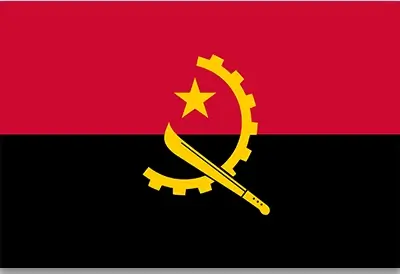
Correct answer: Angola.
The black-and-red flag reflects the Marxist movement that won independence from Portugal: the machete for peasants and armed struggle, the cogwheel for industrial workers.

Correct answer: Eritrea.
The olive symbolises the long struggle for independence from Ethiopia; green is for agriculture and blue for the Red Sea.

Correct answer: Rwanda.
The earlier red-yellow-green flag was dropped to break with the violence; the rising sun stands for enlightenment and a fresh start.

Correct answer: Ethiopia.
Because Ethiopia resisted European colonisation, newly independent African nations adopted its colours in solidarity. A golden star sits on the central blue disc.

Correct answer: Ghana.
Ghana was the first sub-Saharan colony to win independence. Its "Black Star" echoes the Black Star Line of pan-Africanist Marcus Garvey and names the national football team.

Correct answer: Egypt.
The Eagle of Saladin is a pan-Arab symbol named for the 12th-century sultan; the red, white and black bands are the Arab Liberation colours.

Correct answer: Kenya.
Black is for the people, red for the blood shed for freedom, green for the land — and the shield with spears for the defence of all three.

Correct answer: Turkmenistan.
The five carpet "guls" represent the country's five main tribes. The flag also carries a crescent, five stars and two olive branches, and is often called the world's most detailed national flag.
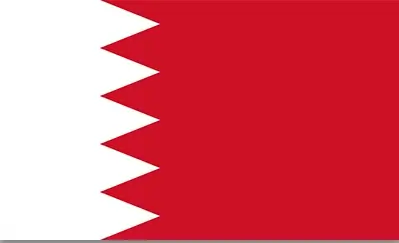
Correct answer: Bahrain.
The five points were standardised in 2002; the zigzag edge distinguishes Bahrain's red flag from the similar maroon flag of Qatar.

Correct answer: Qatar.
Qatar's flag is unusually elongated — wider than twice its height. Its maroon began as a red dye that darkened under the desert sun, setting it apart from neighbouring Bahrain.

Correct answer: Brunei.
The crest's pair of upturned hands symbolises the government's pledge to promote welfare and peace; yellow is the colour of the sultan.

Correct answer: Myanmar.
The single large star represents the union of the country; yellow, green and red stand for solidarity, peace and courage.
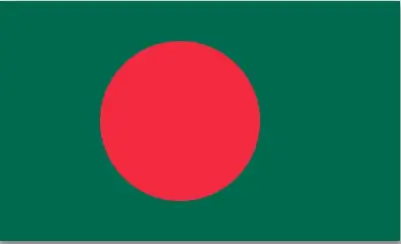
Correct answer: Bangladesh.
The disc is deliberately off-centre so it appears centred when the flag flutters. Red is the blood of the 1971 liberation war; green is the fertile land.

Correct answer: Laos.
The white circle represents the full moon over the Mekong River and national unity. Unusually for a communist-led state, the flag bears no red star.

Correct answer: North Korea.
The red star represents the revolution; the blue bands stand for sovereignty and peace, and the white for purity.

Correct answer: Thailand.
Red is the nation, white is religion, and blue the king; the blue band was reportedly added to show solidarity with the Allies during the First World War.

Correct answer: United Arab Emirates.
The four colours appear in a famous medieval Arabic poem as emblems of Arab virtues and dynasties. The red band sits vertically at the hoist.

Correct answer: Jordan.
The seven points of the star are said to stand for the seven verses of the opening chapter of the Quran. Palestine's flag is nearly identical but without the star.

Correct answer: Iraq.
The red, white and black are pan-Arab colours; the inscription was redrawn in its current clean Kufic style in 2008.

Correct answer: Iran.
"Allahu Akbar" is written 22 times along the edges of the white band, marking the 22nd of the month Bahman — the date of the 1979 revolution.
Correct answer: Kyrgyzstan.
The criss-cross inside the sun is a "tunduk," the wooden crown at the peak of a nomad's yurt — a symbol of home and family.
Correct answer: Sri Lanka.
The four leaves are from the sacred bo (Bodhi) tree; the green and orange stripes represent the island's Muslim and Tamil communities.
Correct answer: Philippines.
In peacetime the blue band is on top. The white triangle holds a golden sun with eight rays for the first eight provinces to revolt against Spain, and three stars for the main island groups.

Correct answer: Mongolia.
The Soyombo is a national emblem made of stacked elemental symbols. The red panels stand for prosperity, the blue for the eternal sky.

Correct answer: Lebanon.
The Cedar of Lebanon, mentioned throughout the Bible, symbolises holiness, eternity and peace.

Correct answer: Israel.
The two blue bands recall the stripes of the tallit; the six-pointed star is the Magen David, the "Shield of David."

Correct answer: Cambodia.
The three-towered silhouette of the 12th-century temple has appeared on Cambodian flags for more than a century, making it the only current national flag to depict a building.

Correct answer: Vietnam.
Known as the "golden star flag," its five points are said to represent workers, peasants, soldiers, intellectuals and youth.

Correct answer: Saudi Arabia.
Because the sacred Shahada must not be dishonoured, the flag is never lowered to half-mast and is printed on both sides so the script reads correctly from either.

Correct answer: Singapore.
The crescent is a rising young country; the five stars are democracy, peace, progress, justice and equality.
Correct answer: Indonesia.
Called "Sang Saka Merah-Putih" — red for courage, white for purity. Turned upside down, it becomes the flag of Poland.

Correct answer: The country's religious minorities.
Green with the crescent and star stands for the Muslim majority; the white band is a deliberate pledge to the nation's minority communities.
Correct answer: The people united under the Communist Party.
The large star is the Communist Party; the four smaller stars originally stood for the four social classes of the revolution, all gathered around it.
Correct answer: 24.
The 24-spoke "wheel of dharma" replaced Gandhi's spinning wheel in the final design. Saffron stands for courage, green for faith and fertility.

Correct answer: Czechia.
When Czechoslovakia split in 1993, the Czech Republic kept the former joint flag — adding the blue triangle to the historic white and red of Bohemia.

We Value Your Opinion Comments